
Many parents carry a quiet fear. What if I'm too damaged? What if my childhood affected me more than I realize? What if these patterns are simply who I am?
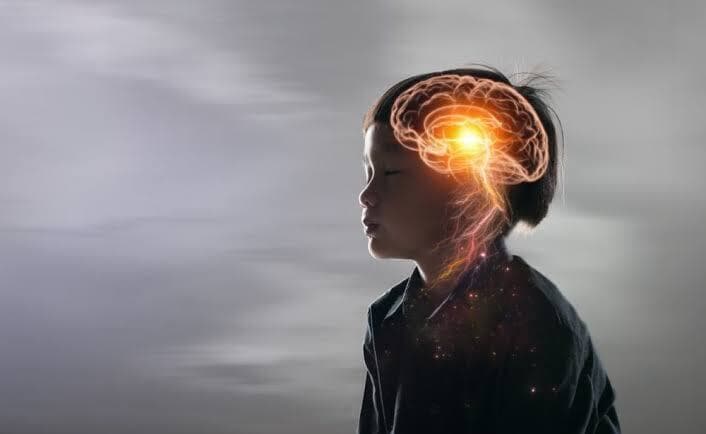
If you've ever wondered whether it's possible to truly change the emotional habits, reactions, and relationship patterns you've carried for years, modern neuroscience offers an encouraging answer: yes, your brain can change. In fact, your brain is changing right now.
The scientific term for this ability is neuroplasticity, and it is one of the most important discoveries in psychology and neuroscience over the past several decades.
The Old Myth: People Can't Change
For much of the twentieth century, scientists believed the adult brain was relatively fixed. The assumption was simple: childhood shapes the brain, the brain becomes hardwired, and adults are largely stuck with the patterns they developed early in life.
Today, we know that assumption was wrong. Research has repeatedly demonstrated that the brain remains capable of change throughout life. New neural connections can form. Old pathways can weaken. Emotional responses can be updated. Relationship patterns can be reshaped.
The brain is not a stone sculpture. It is a living, adaptable system.
What Is Neuroplasticity?
Neuroplasticity refers to the brain's ability to reorganize itself in response to experience. Every thought, emotion, behavior, and interaction activates networks of neurons inside the brain. The more frequently a pathway is used, the stronger it becomes.
“Neurons that fire together, wire together.”Donald Hebb, 1949
In practical terms, this means: every time you repeat a behavior, you strengthen the neural pathway that supports it. Every time you practice a new response, you begin building a different pathway. This process happens continuously throughout life. Your brain is always learning. The question is simply what it's learning.
Why Old Parenting Patterns Feel Automatic
If you grew up in an environment filled with criticism, emotional neglect, unpredictability, or chronic stress, your nervous system adapted. Those adaptations helped you survive.
Over time, these responses became deeply wired. The brain prefers efficiency. Once a pathway becomes familiar, the brain automatically chooses it because it requires less energy. This is why many parents find themselves reacting before they even realize what's happening.
“The encouraging news is that defaults are not destiny.”
The Parenting Brain Is Especially Plastic
One of the most fascinating discoveries in neuroscience is that becoming a parent actually increases the brain's capacity for change. Researchers have found measurable changes in brain regions responsible for empathy, emotional awareness, social connection, threat detection, and caregiving behavior.
In many ways, parenthood creates a unique opportunity for growth. The very challenges that expose old wounds also create opportunities to heal them. Every difficult parenting moment becomes an invitation to build new neural pathways.
Why Awareness Alone Isn't Enough
Many parents have experienced this frustration: they understand their patterns. They know where those patterns came from. Yet they continue repeating them.
Understanding a pattern is cognitive. Changing a pattern is neurological. You may fully understand why you become reactive when your child ignores you. But when the trigger appears, the old pathway still activates automatically.
Awareness opens the door. Practice creates the transformation.
Why Self-Compassion Accelerates Change
Many parents approach healing with self-criticism. They believe being hard on themselves will motivate growth. Neuroscience suggests the opposite.
Harsh self-judgment activates the threat response. When the brain perceives threat, learning becomes more difficult. The nervous system shifts into protection mode. Self-compassion creates a different environment—it reduces stress, increases emotional safety, and keeps the brain open to learning and adaptation.
“Small actions, repeated consistently, literally reshape the brain.”
When you develop greater emotional regulation, your children experience a more regulated environment. When you practice healthier relationship patterns, your children learn healthier relationship patterns. When you build new pathways, you model change itself.
Every time you choose awareness over autopilot, regulation over reactivity, and connection over fear, your brain changes. And as your brain changes, so does your family.
References
Davidson, R. J., & McEwen, B. S. (2012). Social influences on neuroplasticity. Nature Neuroscience, 15(5), 689–695.
Doidge, N. (2007). The brain that changes itself. Viking.
Hebb, D. O. (1949). The organization of behavior. Wiley.
Kim, P., et al. (2010). The plasticity of human maternal brain. Behavioral Neuroscience, 124(5), 695–700.
Kolb, B., & Gibb, R. (2011). Brain plasticity and behaviour in the developing brain. Journal of the Canadian Academy of Child and Adolescent Psychiatry, 20(4), 265–276.
Neff, K. D. (2011). Self-compassion. William Morrow.
Siegel, D. J. (2012). The developing mind (2nd ed.). Guilford Press.
van der Kolk, B. (2014). The body keeps the score. Viking.
This article draws from "Breaking Generational Trauma" by M. Eliza Rowen.
Available on Amazon